5002 Lakeland Circle, Suite B, Waco, Texas 76710


Yes, a skilled chiropractor can absolutely help with a pinched nerve in the neck. It’s one of the most common reasons people visit our clinic, and for good reason. That sharp, radiating pain is your body sending a clear signal that something is wrong, and chiropractic care offers a safe, non-invasive path toward real, lasting relief.
This condition, known medically as cervical radiculopathy, happens when a nerve in your neck gets compressed or irritated by the surrounding structures. A chiropractor’s job is to figure out why that nerve is under pressure and then gently relieve it, addressing the root cause of your pain.
Table of Contents

Think of the nerves branching out from your spinal cord as tiny electrical wires carrying messages from your brain to the rest of your body. A pinched nerve is like a kink in one of those wires—the flow of signals gets choked off. This interference is what triggers the pain, numbness, and weakness that can make daily life so difficult.
When this happens in your cervical spine (the seven vertebrae in your neck), the effects rarely stay in one spot. Because those nerves control your shoulders, arms, and hands, you might feel symptoms that travel all the way down to your fingertips.
A pinched nerve in the neck is more than just a minor ache; it's a sign of underlying pressure on your nervous system. Addressing the source of this compression is key to not only alleviating pain but also restoring proper communication between your brain and body.
Waking up with a sharp, shooting pain radiating from your neck down your arm is an alarming experience. Simple movements can feel impossible. If this sounds familiar, you're not alone; many adults will experience a pinched nerve at some point. It often leads to disruptive neck pain, numbness, and that frustrating "pins-and-needles" feeling.
So, what’s actually causing that nerve to get pinched? Several underlying issues can narrow the space where nerves exit your spinal column, creating physical pressure. The symptoms you feel are directly related to which nerve is being irritated and why.
This table breaks down the most common culprits we see in our practice and the symptoms they typically produce.
| Common Cause | How It Compresses the Nerve | Typical Symptoms |
|---|---|---|
| Herniated or Bulging Discs | The soft, gel-like center of a spinal disc pushes out and presses directly on a nearby nerve root. | Sharp, shooting pain that follows a clear path down the arm; often made worse by coughing or sneezing. |
| Spinal Misalignment | A vertebra in the neck shifts out of its proper position, directly impinging on the nerve as it exits the spine. | Aching neck pain, stiffness, and radiating pain that can be dull or sharp, depending on the severity. |
| Bone Spurs (Osteophytes) | Bony growths, often from degenerative changes like arthritis, can form and narrow the nerve pathway. | Chronic, dull ache in the neck that can progress to sharp, radiating pain; often worse in the morning. |
| Poor Posture | Chronic "tech neck" from looking down at screens puts sustained strain on the neck, causing muscle tension and inflammation that irritates nerves over time. | General neck soreness and stiffness that can develop into numbness or tingling in the hands and fingers. |
Recognizing how these issues connect to your symptoms is the first step. The next is finding a solution that addresses the underlying structural problem—which is exactly where chiropractic care comes in.
The symptoms of a pinched nerve in the neck can vary widely, but they almost always extend beyond local pain. Because the cervical nerves control function in your arms and hands, you might experience issues anywhere from your shoulder down to your fingertips. For a deeper dive, check out our guide on common upper cervical conditions.
Here are the key signs to watch for:
Finding the true source of your pain is the critical first step toward getting relief that actually lasts. Before any treatment can begin, a skilled chiropractor needs to do some detective work to figure out exactly where your nerve is being pinched and why. This methodical process ensures your care plan is built for you, not just for your symptoms.
This investigation is crucial because neck pain isn't a one-size-fits-all problem. It's a massive global issue, affecting millions of people and limiting their daily activities. To provide care that works, we have to understand the unique structural issues behind your specific discomfort. This careful approach is backed by research, with guidelines from recent Cochrane reviews endorsing spinal manipulative therapy—a cornerstone of chiropractic care—for providing significant pain relief.
Your first visit will always begin with a conversation. This isn't just a formality; it's where we start connecting the dots between your life and the symptoms you're feeling.
We’ll ask you to share the details that help paint a complete picture of your health, like:
This conversation helps us understand the full context of your pain and points us in the right direction for the exam.
Next comes the physical and neurological exam, where your chiropractor will use hands-on tests to see how your neck and nervous system are actually working. This part is absolutely essential for identifying the exact nerve root that’s irritated and figuring out how severe the compression is.
A thorough physical exam moves beyond just looking at the area of pain. It assesses the entire kinetic chain—from your spine to your fingertips—to see how nerve compression is affecting your body’s overall function.
This diagnostic phase involves several key assessments:
These hands-on evaluations give us direct feedback about what your body is going through. You can learn more about how our comprehensive approach integrates these diagnostic steps into a personalized plan of action.
Sometimes, the physical exam doesn't tell the whole story. If we suspect there's an underlying issue like a herniated disc or significant wear and tear, we might recommend diagnostic imaging.
These tools give us a clear window into the structures of your neck:
Using these tools when necessary ensures your diagnosis is precise. It allows your chiropractor to build the safest and most effective treatment plan to finally relieve the pressure on that nerve and help you find lasting comfort.

Once your chiropractor has pinpointed the exact cause of your pinched nerve, the focus shifts to treatment. The goal is simple but powerful: gently relieve the pressure, restore proper motion to your neck vertebrae, and create the space your body needs to start healing. This isn't about chasing symptoms; it's about correcting the underlying structural problem.
The cornerstone of this approach is the chiropractic adjustment, also known as spinal manipulation. Imagine a misaligned vertebra as a door that’s slightly off its hinges, pinching the delicate nerve passing through. The adjustment is a precise, controlled maneuver that realigns that door, allowing the nerve to function freely without being choked off.
This process is carefully customized for every patient. A skilled chiropractor in Green Bay, WI, will select the right technique for your specific condition, ensuring the treatment is both effective and comfortable.
When people hear "chiropractic adjustment," some imagine forceful twisting or cracking. While traditional methods have their place, modern chiropractic care offers a wide array of techniques, including many low-force options that are incredibly gentle.
The effectiveness of these adjustments is well-documented. A key study in the Journal of Manipulative and Physiological Therapeutics00216-7/fulltext) showed that patients with cervical radiculopathy (the clinical term for a pinched neck nerve) experienced significant pain reduction and marked improvements in mobility after chiropractic adjustments. This confirms what we see in practice every day: adjustments are a powerful tool for nerve-related pain.
While adjustments are central to care, a truly effective treatment plan addresses the issue from multiple angles. A pinched nerve rarely happens in a vacuum; it often involves tight muscles, inflammation, and lifestyle factors that contributed to the problem in the first place.
Lasting relief from a pinched nerve comes from more than just a single adjustment. It's about creating a supportive healing environment that includes muscle release, strengthening exercises, and better daily habits.
This comprehensive approach ensures that not only is the nerve pressure relieved, but the surrounding muscles and ligaments also become healthy and resilient.
To speed up your recovery, your chiropractor will likely integrate other therapies into your care plan. These treatments work in tandem with your adjustments to provide more complete and lasting relief from that pinched nerve in your neck.
Here are a few common complementary therapies you might encounter:
By combining precise spinal adjustments with these supportive therapies, chiropractic care offers a robust solution. It's a strategy that not only answers the question "can chiropractors help a pinched nerve in the neck" with a resounding yes, but also provides a clear path to getting you back to a life free from pain.
While many chiropractic methods can offer relief for a pinched nerve, a specialized approach called upper cervical care zeroes in on the problem with incredible precision. It all comes down to a simple, powerful principle: your entire body's balance and alignment hinge on the top two bones in your neck, the atlas (C1) and the axis (C2).
Picture your head, which weighs about 10 to 12 pounds, as a bowling ball balanced perfectly on the top of your spine. When the atlas and axis are aligned just right, your body stays centered and stable without any effort. But if those top two bones shift even a tiny bit, your head tilts, forcing the rest of your spine to twist and compensate just to keep you upright.
This compensation kicks off a chain reaction down your entire spinal column, creating uneven muscle tension and, you guessed it, irritating the delicate nerves exiting your spine.
Instead of chasing pain around different parts of the spine, an upper cervical chiropractor identifies and corrects that one foundational misalignment at the very top. The goal is simple: fix the primary issue, and the rest of the spine can naturally unwind and return to a more stable, balanced position. This gets to the root cause of nerve compression instead of just temporarily silencing the symptoms.
The core idea of upper cervical care is that a small, precise adjustment at the top of the neck creates a massive positive ripple effect through the entire nervous system. It clears the way for the body's own incredible ability to heal.
This approach is also exceptionally gentle. You won't experience any forceful twisting, popping, or cracking. The adjustments are light and specific, designed to gently nudge the vertebrae back where they belong, reopening the vital communication lines between your brain and body.
Every upper cervical adjustment is customized to the patient's unique spinal anatomy, which is determined through detailed diagnostic imaging. This precision ensures the correction is exactly what your body needs to restore balance and nothing more.
For a pinched nerve in your neck, this is a game-changer:
This targeted method is a key reason so many people who ask, "can chiropractors help a pinched nerve in the neck?" find lasting success with this approach. It’s where specialists shine, using techniques that target the precise misalignment to release nerve pressure without drugs or surgery.
By addressing the foundational cause of the imbalance, this type of care does more than just quiet down the symptoms—it creates the right environment for your body to truly heal itself. To learn more about this unique perspective, you can read more about our approach to upper cervical care.
Understanding what’s ahead can make all the difference in your healing process. Think of this as a roadmap for your chiropractic care, guiding you from that first visit all the way to maintaining a healthy spine long after the pressure is off that pinched nerve in your neck. The entire process is broken down into a few distinct phases, each with its own clear goal.
Your active participation is a huge part of your success. Just like a physical therapist gives you exercises to do at home, we'll give you guidance to support the work we do in the office. This partnership is what gets you the best possible results.
The first phase of care has one simple mission: get you out of pain. When you first come to us with a pinched nerve, our immediate focus is on calming down that irritated nerve and reducing inflammation. Your visits will probably be more frequent at the beginning to help build momentum and get you feeling better, faster.
Our goal is to gently restore proper motion to the misaligned vertebrae, taking that direct pressure right off the nerve. Most people feel a significant drop in their sharp, radiating pain and other symptoms within just the first few visits.
Once the initial pain has settled down, our focus shifts to fixing the underlying structural problem that caused it in the first place. This is the stabilization phase, where the real, lasting changes happen. The goal here is to retrain your spine and all the supporting muscles to hold the correct alignment on their own.
During this time, you’ll notice your visit frequency will decrease as your body starts to hold its adjustments better. It’s a bit like orthodontics for your spine—it takes time and consistency to create a new, healthier position that sticks. We'll continue with precise adjustments and may introduce specific exercises and stretches to strengthen your alignment.
Your body has adapted to a misaligned position over time, and it needs consistent reinforcement to learn a new, healthier alignment. This corrective phase is where we build the foundation for long-term stability and prevent the problem from returning.
This timeline gives you a great visual of how spinal care has evolved, moving toward more precise and balanced approaches.
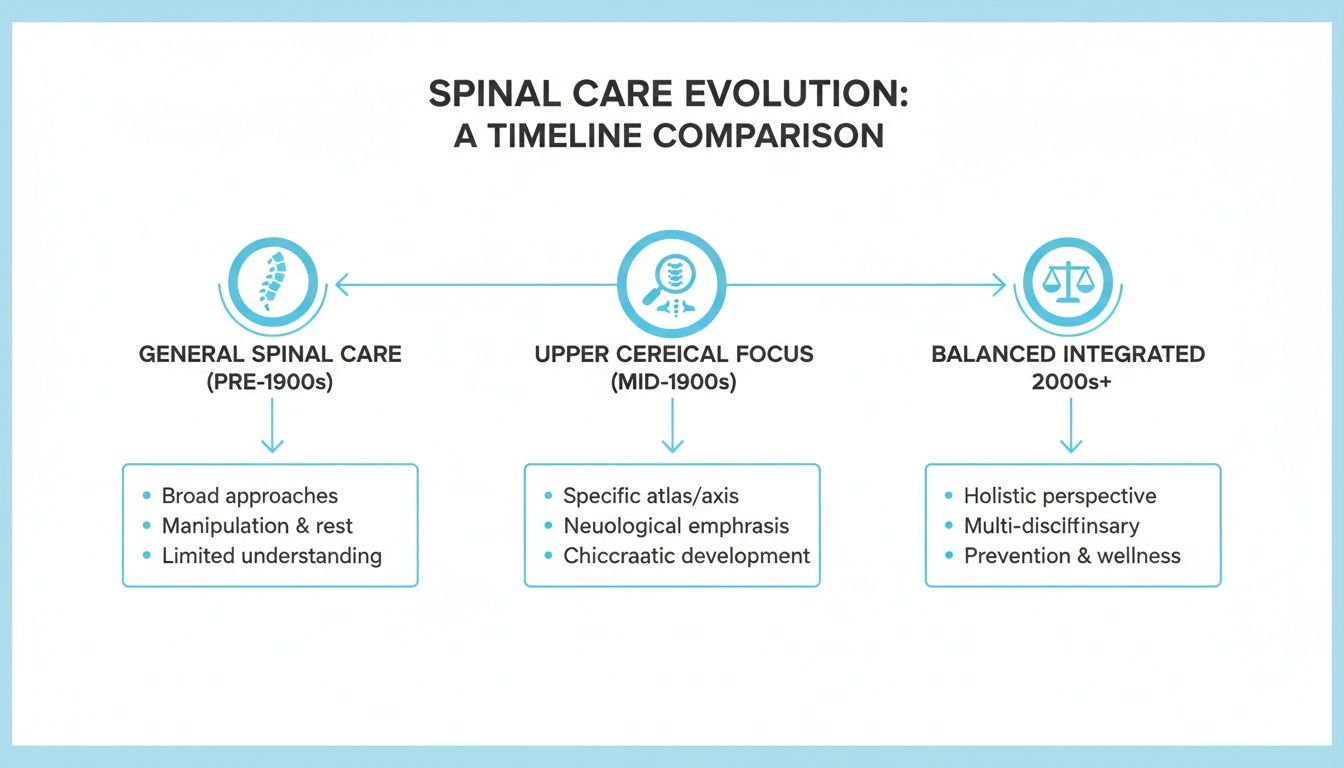
As you can see, the focus has shifted from general manipulation to highly targeted methods like upper cervical care, which aims to correct the foundational alignment for results that truly last.
After your spine has stabilized and your symptoms are gone, you graduate to the wellness phase. This stage is all about maintenance and prevention. You’ve worked hard to get to this point, and now the goal is to protect that progress and keep your body functioning at its absolute best.
Wellness visits are much less frequent—maybe once a month or every couple of months, depending on your lifestyle and specific needs. These periodic check-ups allow us to catch and correct any minor misalignments before they have a chance to turn into bigger problems.
This proactive approach helps you keep the results you’ve earned and prevent future episodes of a pinched nerve. The evidence for this is powerful. A case study highlighted a patient whose severe neck pain dropped to a 0/10 on the pain scale after just four weeks of consistent adjustments, with all nerve symptoms completely gone. You can read more about these chiropractic success stories and see what’s possible.
To give you a clearer picture, let's break down these stages. Understanding the typical progression of chiropractic treatment helps set realistic expectations for your recovery journey.
| Phase of Care | What We Aim to Achieve | What It Involves |
|---|---|---|
| Phase 1: Relief Care | Reduce your immediate pain, calm inflammation, and improve your mobility. | More frequent adjustments focused on alleviating the acute symptoms of your pinched nerve. |
| Phase 2: Corrective Care | Correct the underlying spinal misalignments and strengthen supporting muscles. | Less frequent adjustments, plus targeted exercises and stretches to stabilize your spine. |
| Phase 3: Wellness Care | Maintain your spinal health, prevent future problems, and enhance overall function. | Periodic check-ups and adjustments as needed to address minor issues before they worsen. |
Each phase builds on the last, moving you from immediate relief to long-term stability and optimal health. It's a structured journey designed to help you not just feel better, but stay better.
While chiropractic care is a safe and highly effective solution for most pinched nerves in the neck, your health and safety always come first. There are times when certain symptoms can signal a more serious underlying medical issue that needs an immediate evaluation. A responsible chiropractor is trained to spot these critical warning signs and will make sure you get to the right medical specialist without a moment's delay.
Think of these as your body’s emergency signals. While discomfort and radiating pain are typical, some symptoms go far beyond what’s expected with a standard pinched nerve and should never be ignored. They can indicate a level of nerve compression that needs urgent medical attention, potentially involving the spinal cord itself.
If you experience any of the following symptoms along with your neck pain, it is essential to seek care at an emergency room or from your medical doctor right away. Do not wait for a chiropractic appointment.
These signs can point to significant pressure on the spinal cord, a condition known as myelopathy, or another serious neurological problem.
Your well-being is the top priority. A professional chiropractor in Green Bay, WI, is a key part of your healthcare team and is committed to ensuring you receive the appropriate level of care, even if that means referring you to another provider for an urgent issue.
Recognizing these symptoms allows you to act quickly, which is critical for the best possible outcome. While we are confident in our ability to help with a pinched nerve in the neck, we are also dedicated to your overall health. That includes guiding you toward emergency medical care when it’s necessary. Our goal is to see you get the right care at the right time.
Deciding on the right care for a pinched nerve in your neck is a big step, and it's completely normal to have questions. Feeling informed is key. Below are some straightforward answers to the questions we hear most often from patients who are exactly where you are now.
We want you to have the clarity you need to feel confident about your health decisions.
Everyone’s healing journey is a little different, and the timeline really depends on how severe the nerve compression is and how long you've been dealing with it. That said, many of our patients report feeling a significant drop in their pain levels within just the first few visits.
A complete corrective plan, however, might span several weeks. This isn't just about stopping the pain; it's about making sure the nerve has fully healed and the surrounding spinal structures are stable. That stability is what helps prevent the problem from making an unwelcome return down the road.
This is a big concern for many, and the answer is reassuring. Chiropractic adjustments, especially the precise and gentle upper cervical techniques we use, are designed to be comfortable. The most common feeling patients describe is a sense of relief, both during and after the treatment.
Is it possible to feel a little mild soreness afterward? Yes, sometimes. Think of it like the feeling you get after a good workout you haven't done in a while. This is a normal part of the body's healing process and is only temporary.
When performed by a licensed and experienced chiropractor, adjustments are an incredibly safe and effective treatment. Before any care begins, your chiropractor will perform a thorough examination to make absolutely sure you are a good candidate for this approach.
The specific techniques we use are designed to gently reduce nerve pressure, not increase it. Your safety and well-being are always the top priority.
Your chiropractor will give you specific stretches and posture tips that are tailored just for you. But in general, good supportive care at home often includes:
Following these tips at home is a great way to support the adjustments you receive in our office and speed up your recovery.
Are you ready to find a lasting solution for your neck pain? If you’re looking for a chiropractor in Green Bay, WI, our team is here to help you understand the root cause of your discomfort and create a personalized plan to get you back to living your life. Schedule your consultation today to learn more about how our gentle, precise care can make a difference. https://victoryspinalcarewaco.com